Gallery
What It Looks Like
Tanzania Safari Tours & Africa Adventures
Half a million wildebeest born in a few short weeks on the southern plains — and the most concentrated predator action in Africa.
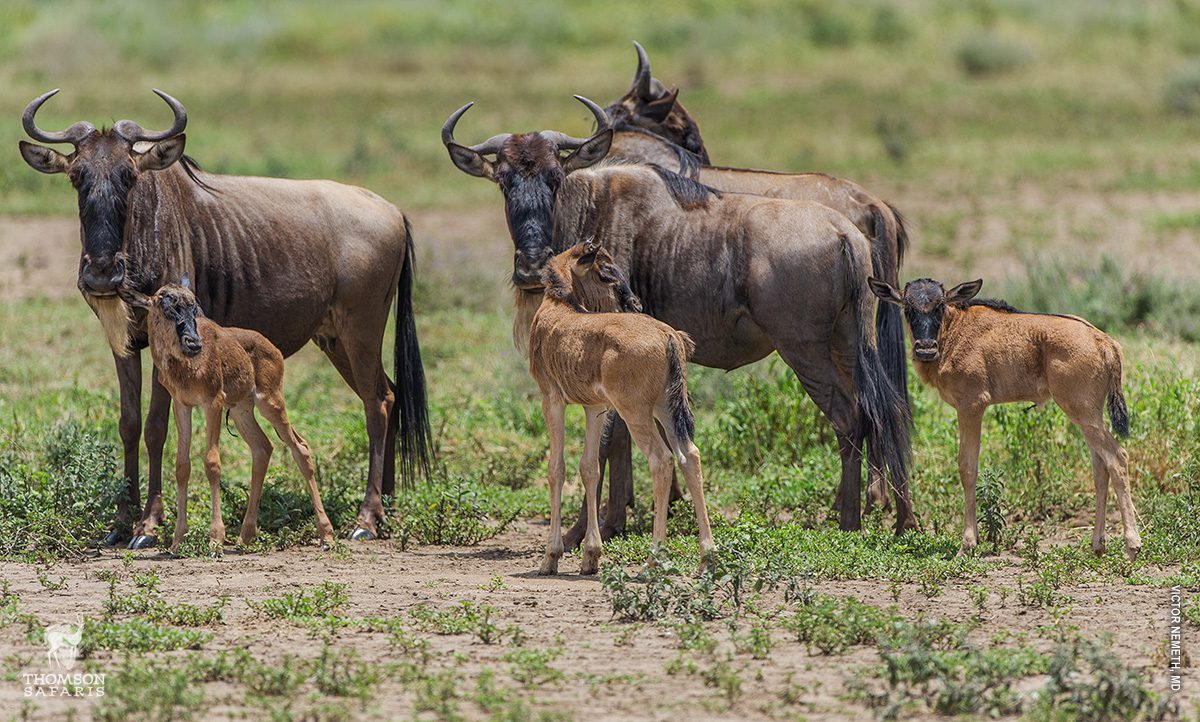
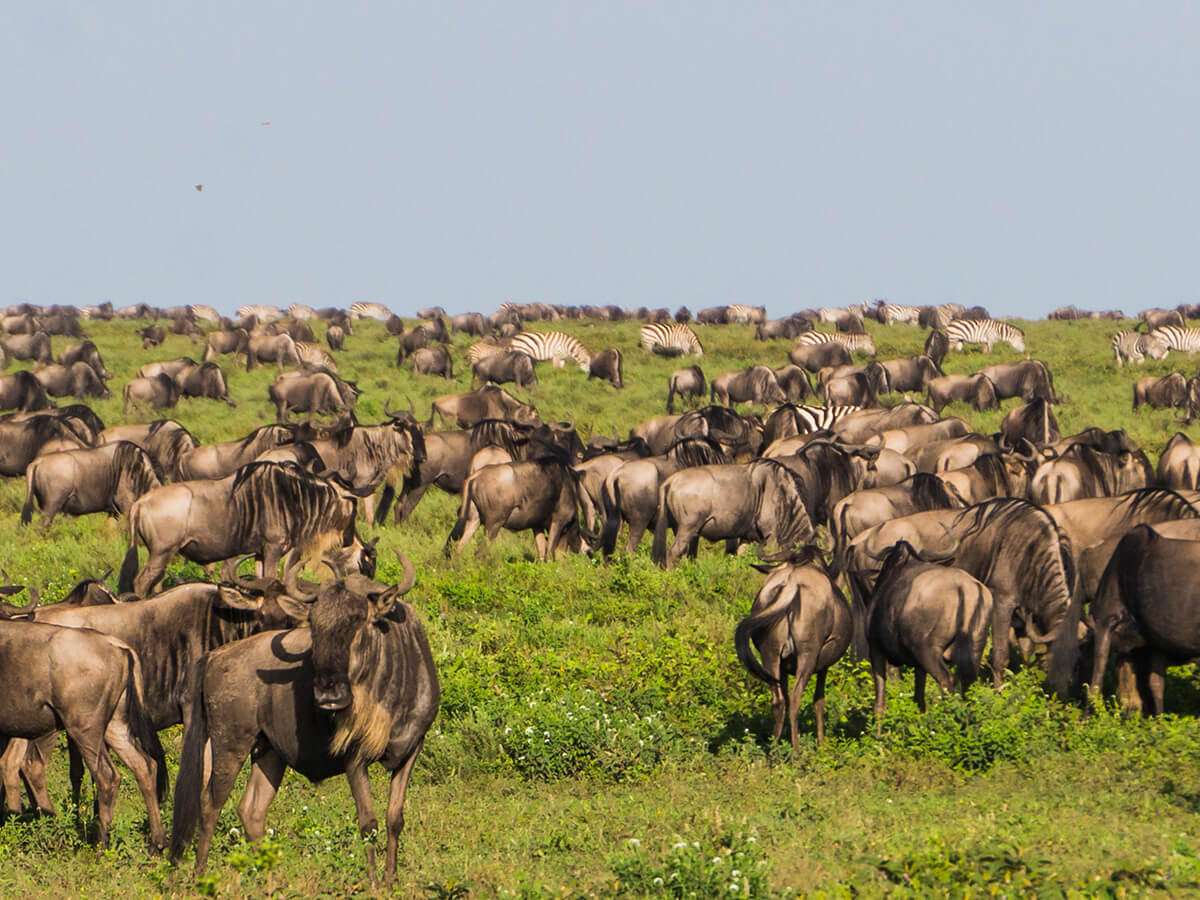
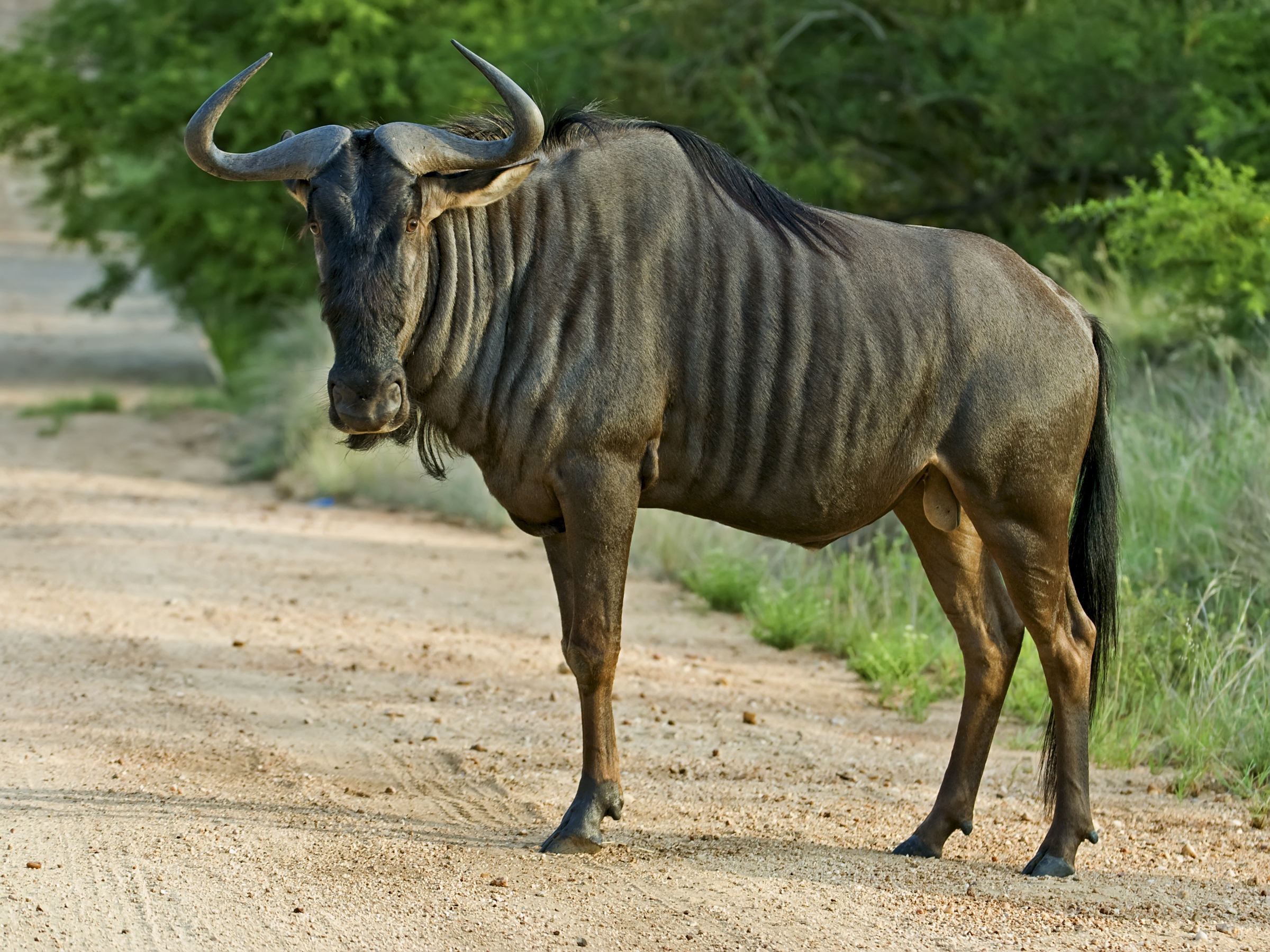
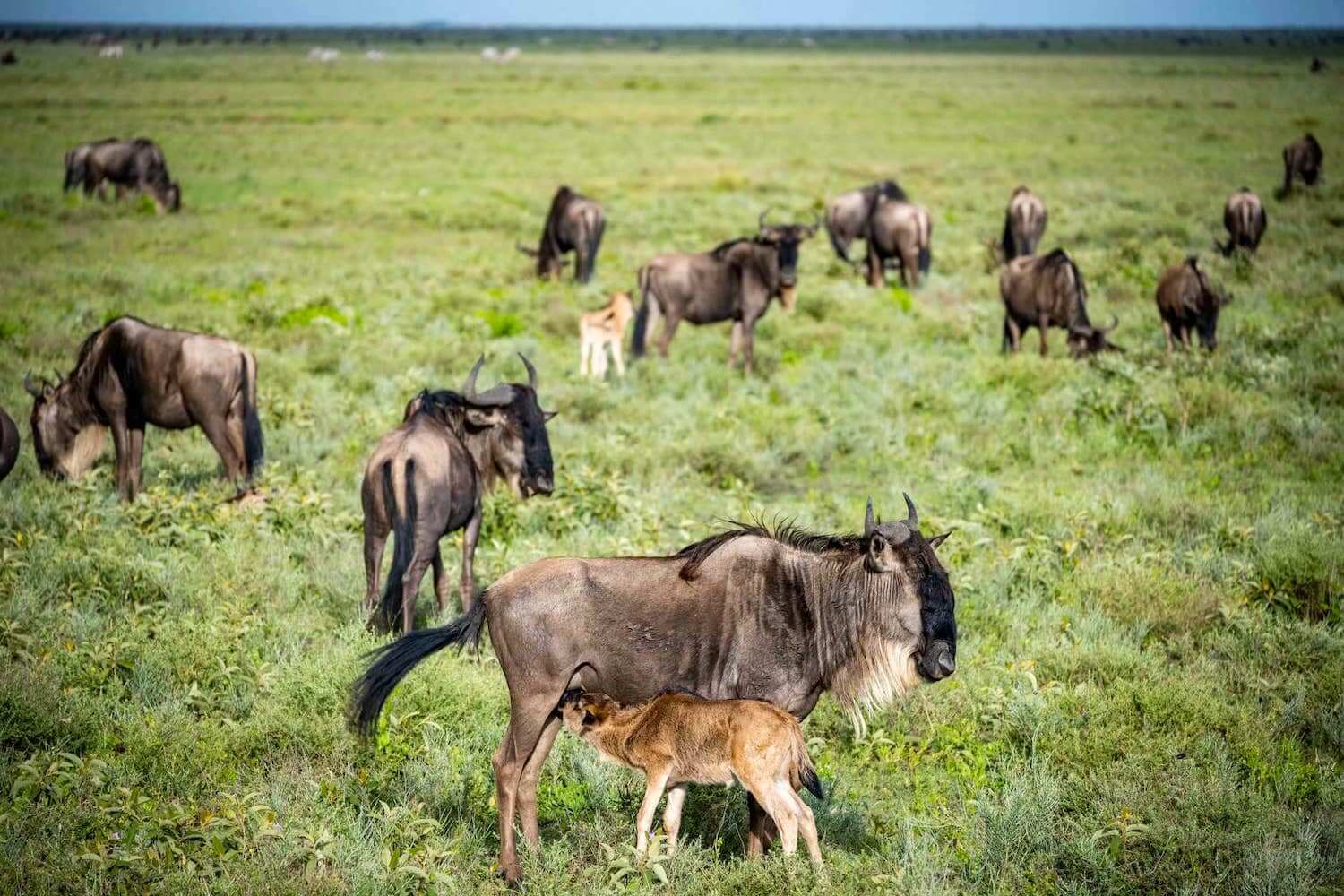
Each year from late January to March, the migration gathers on the short-grass southern plains around Ndutu to give birth — around 8,000 wildebeest calves a day at the peak, half a million in a matter of weeks. The mineral-rich grass and open ground make it the safest place to drop young, and the spectacle of newborns finding their feet within minutes is extraordinary.
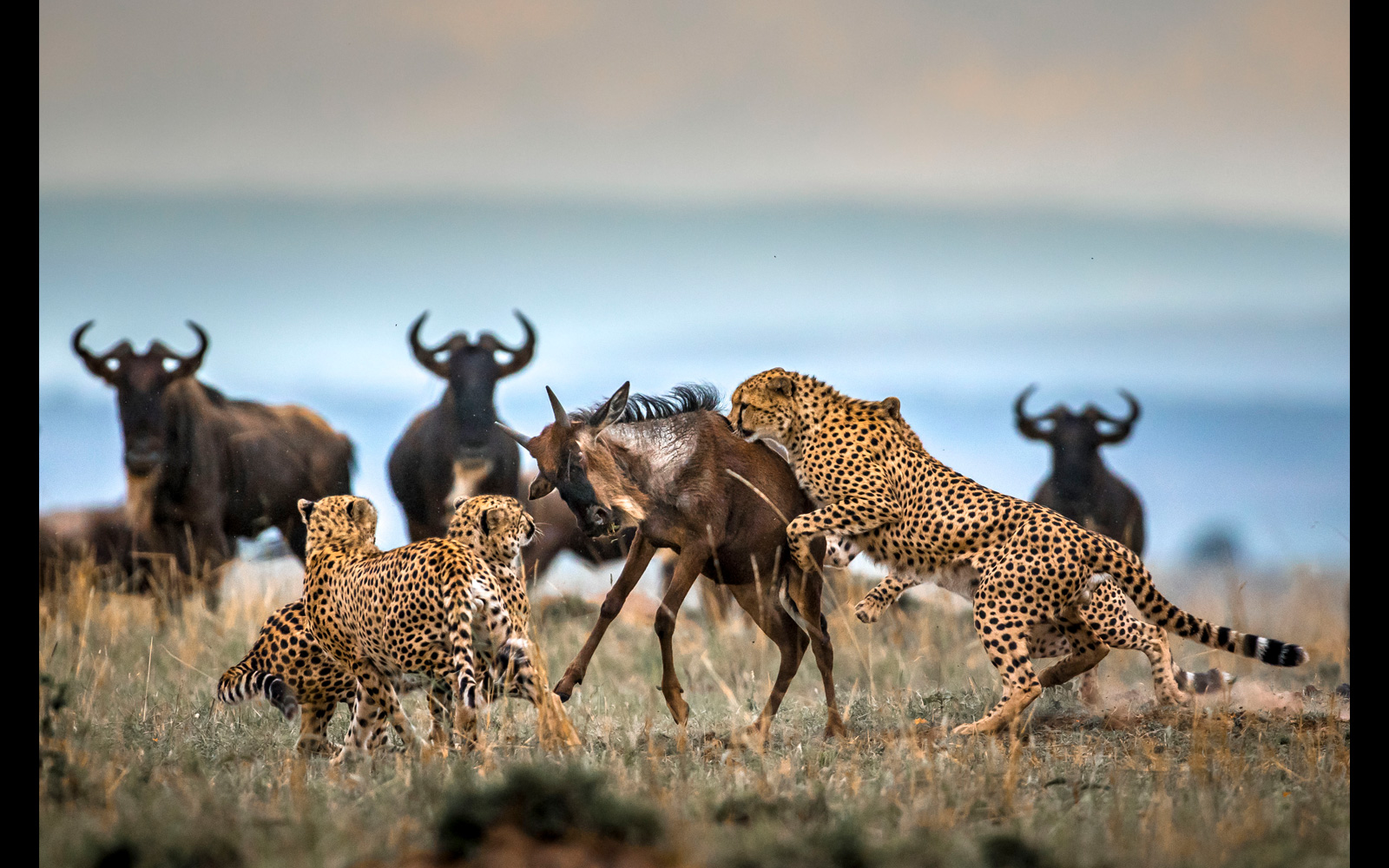
Where there is vulnerable prey there are predators, and calving season is the most concentrated big-cat action on the continent — lion, cheetah, and hyena hunting daily in plain view. For wildlife drama and photography, no other window matches it.
Drive out among the massed herds and newborns.
Cats and hyena test the herds in the open — daily drama.
Watch calves born and on their feet within minutes.
Big skies and soft light over a sea of animals.
This is our top pick for first-time visitors travelling January to March — the combination of newborn herds, open visibility, and relentless predator action is unmatched, and it's less weather-dependent than chasing river crossings. The Ndutu area straddles a conservation zone, so expect a mix of park and conservancy fees.

Contact us now — we are always here to help with honest, expert advice at no cost.
Tell us about your dream trip and our Tanzania safari specialists will get back to you within 24 hours with a personalised itinerary and no-obligation quote.
A short planning brief gives our team enough context to suggest the right parks, route, pace and accommodation level.